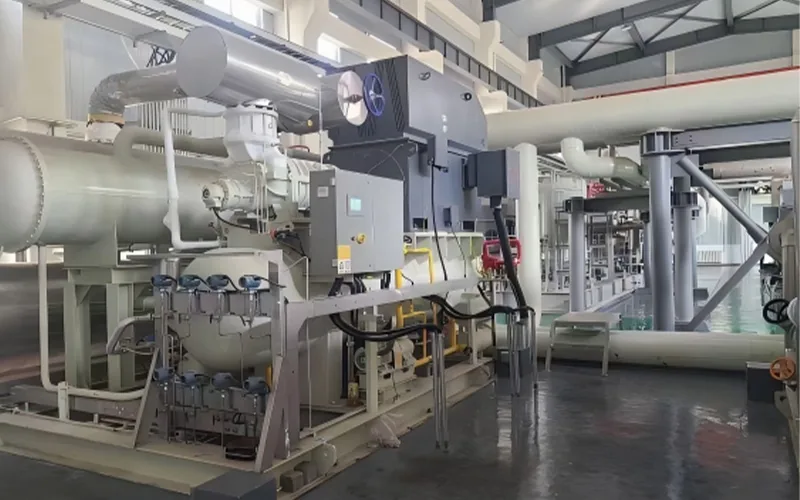
A CO2 compressor quotation can look precise while the project around it is still fuzzy. There may be a model, a pressure, a motor, and a neat skid drawing. Yet nobody has written down the condition at the liquefaction inlet, or decided who owns the cooler between two packages. That is where a tidy quote starts collecting qualifications.
So I would not begin this purchase with a model search. I would put two boxes on a page. The first says what the capture unit actually sends. The second says what the receiving system needs. Compression sits between them. Once those boxes have numbers in them, MOON-TECH's published CO2 compressor data becomes useful for screening rather than guesswork.
Open the meeting with the stream table
Suppose the inquiry says "CO2, 10 tonnes per hour." The procurement team can send it out today, but the replies will be built on the bidders' own assumptions. One may picture dry gas at a comfortable suction pressure. Another may allow more moisture or a wider temperature range. Their prices will not be comparable even if both cover 10 tonnes per hour.
I would pause the inquiry and get the stream table onto one page. Composition and water content go beside flow. Suction pressure and temperature need minimum, normal, and maximum cases. If start-up or recovery produces a different condition, give it a separate row. Do not bury it in a note.
Then read the table aloud with the capture team. A few plain questions usually uncover the gaps:
- Which row lasts for hours, and which one lasts for minutes?
- Where are pressure and temperature measured?
- Could liquid reach the package boundary?
- Which case should the supplier use for selection?
- What will be measured again during the acceptance run?
None of this selects a compressor. It does something more basic: it gives every supplier the same inlet.
The US Department of Energy's National Energy Technology Laboratory overview of CO2 compression places compression in the route that prepares captured CO2 for transport and storage. That wider view matters here. The compressor is a handoff, not an isolated pressure number.
Write the other side of the handoff
The phrase "ready for transport" sounds finished. It isn't. Does the next party want compressed gas, liquid CO2, or an intermediate stream entering another package? At what pressure and temperature? What composition is acceptable at that exact point?
This is the point in a review where I would sketch the route with a marker. Capture outlet. Compressor. Cooling. Liquefaction. Storage. Loading. The drawing can be crude; the ownership labels cannot.
MOON-TECH's published CCUS description places CO2 compression before liquefaction and states that a refrigeration unit provides the cooling required for liquefaction. That tells us the process relationship. It does not say that every project has the same package boundary.
Put the bidder's boundary on the sketch. If compression ends at a flange, note the required condition there. If downstream cooling is included, circle it. Show pressure drop between packages instead of assuming the discharge figure survives all the way to storage.
Someone in the room should also ask what happens away from the design point. Where does start-up gas go? Who controls the transition into liquid production? Which package reacts first when flow falls? The supplier may answer these later, but the question should exist before the order.
Use the MOON-TECH figures without stretching them
MOON-TECH lists its Screw CO2 Compressor Unit for CO2 recovery and pressurization in petroleum, petrochemical, natural gas, coal, chemical, synthetic ammonia, power, steel, and food-fermentation applications. Its product information also states that the equipment has been applied in multiple CCUS projects.
The published applicable working conditions list suction pressure from 0.04 to 2.0 MPa(a), exhaust pressure up to 5.2 MPa(a), and single-stage or dual-stage compression.
Those figures are a useful first window. If a project case sits outside it, the team knows early that a standard screening conversation is not enough. If the case sits inside it, the job is not finished. Gas composition, temperature, flow, utilities, and off-design cases still have to be checked for the proposed selection.
That distinction is easy to lose in a comparison sheet. I would keep one column titled "published range" and a different column titled "offered project case." Never let one stand in for the other.
The MOON-TECH CO2 compressor product route is the equipment starting point. The CO2 compression and liquefaction solution shows the larger process route. Open both when the team is deciding whether a line item belongs to the compressor offer or to the surrounding system.
Follow one difficult case through the train
Average conditions make almost any proposal easy to discuss. Pick the awkward row instead. It might be the lowest suction pressure, the warmest cooling condition, or the period when flow is reduced. Follow that single row from the package inlet to the receiving point.
At each stage, write down the proposed pressure and temperature. Mark any cooling step and its assumed medium. If liquid can appear, the drawing should show where it is handled. The same page can name the alarms or trips that protect the next stage.
This is also a good time to talk about the oil boundary. The receiving process should state the gas condition it needs. The bidder can then describe the oil-separation arrangement in the proposed package and say whether any downstream polishing sits outside the offer. Otherwise, "clean gas" means whatever the person writing the sentence had in mind.
Do not turn the review into a contest over who has the longest checklist. One traced operating case is often more revealing. If the bidder can explain that path clearly, move to the next case. If the path breaks at an interface, stop there.
Let the dispatch calendar into the design room
Liquid production and product dispatch may live on different clocks. Imagine steady production on a day when the truck is late. The compressor has not changed, but the storage and pressure-control situation has. How long can production continue? Where does return gas go? Who decides when to slow or stop?
The NETL report on carbon dioxide transport and storage costs in energy-system studies shows why transport and storage assumptions belong in the system picture. An RFQ does not need to reproduce that study. It does need a real dispatch pattern.
Ask the operations team for a normal week, not an ideal sentence. Note when liquid leaves, how long loading lasts, and what happens if dispatch pauses. Put usable storage limits on the same sheet. Then assign the loading pump, valves, instruments, relief connections, and return-gas route to named scopes.
MOON-TECH's published material names enhanced oil recovery, chemical synthesis, shielding gas, refrigerants, dry ice, food additives, agricultural fertilizers, and geological sequestration as liquid CO2 uses. Those destinations are not interchangeable specifications. The receiving party still sets the quality and regulatory requirements for the selected use.
Build an RFQ that can survive bid comparison
The best RFQ attachment may be a small workbook rather than another page of prose. One tab holds the gas cases. A second holds utilities. A third lists the boundaries and exceptions.
The gas tab should carry the source, composition, water content, flow, suction condition, required discharge, target phase, and downstream temperature. Include start-up or upset recovery only when it changes the duty, but do not hide it when it does.
On the utilities tab, state the cooling medium, expected conditions, power supply, control-system handoff, area classification, and available space. The storage section can show operating limits and the dispatch calendar. Add the acceptance cases and the measurements that both sides will use.
Now attach one process sketch. It should be possible to point to every separator, cooler, pump, drain, valve, instrument, relief connection, and utility connection and say who supplies it. A blank is not fatal at inquiry stage. An invisible blank is.
When replies arrive, do not compare only the bold pressure and motor figures. Read the assumptions first. One bidder may exclude refrigeration. Another may use a different cooling basis. A third may price the normal flow while qualifying the low-flow case.
Give every deviation its own row. "Included," "excluded," and "deviation" are more useful than a paragraph saying the offer generally complies. By the end of the review, the technical and commercial teams should be looking at the same differences.
Five questions worth asking before the order
First, are the quoted inlet and outlet conditions measured at the same points used in the RFQ? A pressure without a location is not a closed requirement.
Second, which operating case governs the proposed selection? The answer should name a row in the shared table.
Third, where does the compressor scope end and the liquefaction scope begin? Mark it on the drawing.
Fourth, what condition must the receiving process get, and how will that condition be demonstrated?
Finally, which assumption could change the price or package most if it turns out to be wrong? Put that one near the top of the clarification list.
FAQ
What belongs in the first CO2 compressor inquiry?
Send the gas composition and water content, flow cases, suction pressure and temperature, required discharge condition, available cooling, and the downstream handoff. Add start-up and recovery rows when they create a different duty.
What range does MOON-TECH publish?
The listed suction range is 0.04 to 2.0 MPa(a), with exhaust pressure up to 5.2 MPa(a). Single-stage and dual-stage compression are listed. These figures support screening, while final selection still uses the project cases.
Does the compressor package automatically include liquefaction?
The published process relationship places compression before liquefaction and identifies refrigeration as the source of cooling. The commercial boundary has to be confirmed for the actual offer.
Why discuss trucks or storage during compressor procurement?
They define the receiving system that compression and liquefaction must serve. A dispatch pause, loading period, or return-gas route can expose a boundary that a compressor-only data sheet never mentions.
What makes two bids genuinely comparable?
Give both bidders the same case table, utility basis, battery-limit sketch, and acceptance cases. Then compare assumptions and exceptions before comparing headline figures.